
Lesson 2 - Impacts
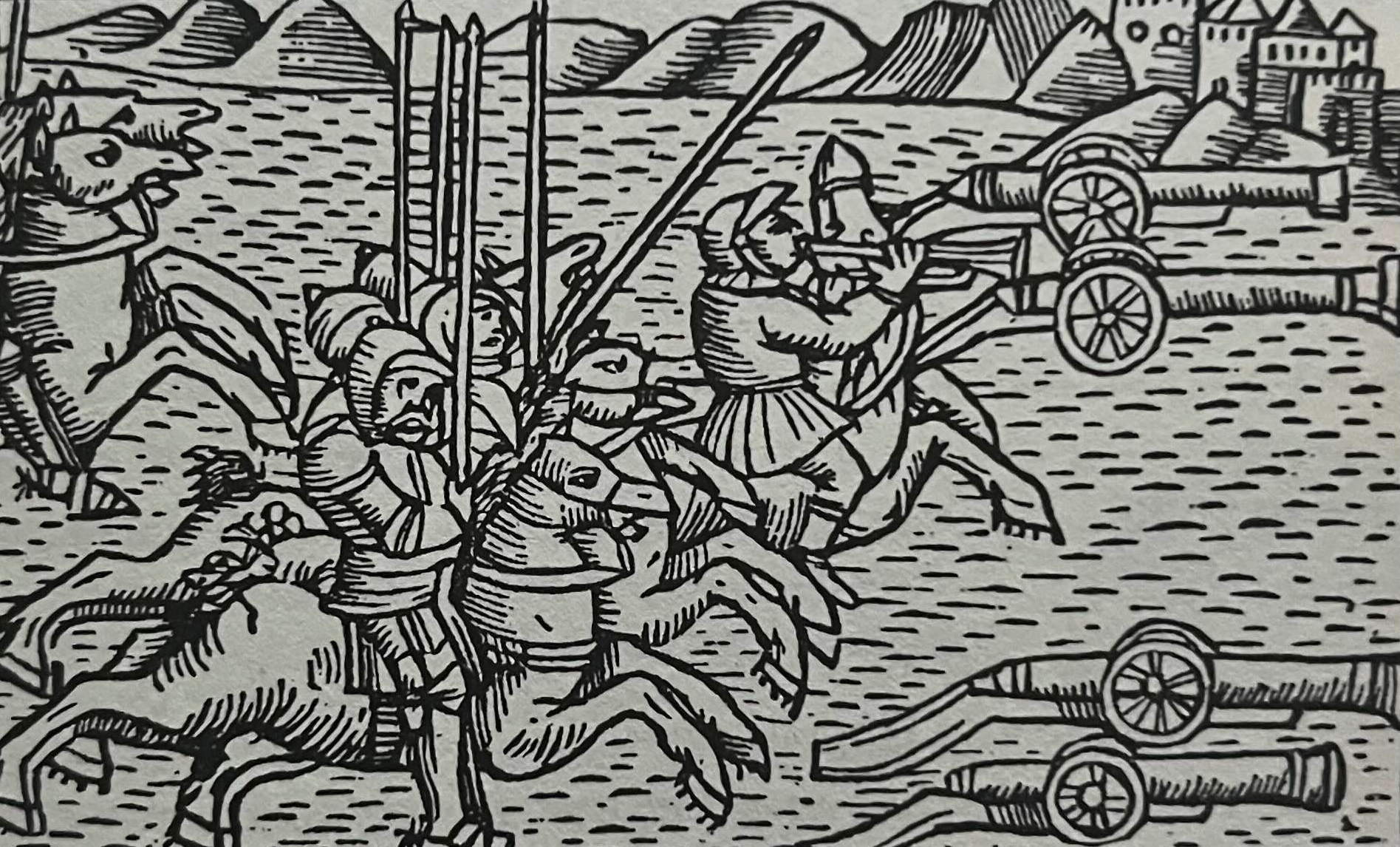
A battle fought on the ice outside of Stockholm in 1465. Olaus Magnus, Description of the Northern Peoples, 1555
Introduction
In this module students learn about the impacts of the Little Ice Age—both common hazards such as food shortages and epidemics as well as complex risks such as conflict and economic depression. Many of these consequences remain relevant today, inviting comparisons between the effects of the LIA and the challenges of global warming.
Presentation
Questions and Answers
In what ways did weather affect harvests during the LIA?
During late medieval and early modern times, agriculture in the Nordic countries was very sensitive to the weather and the cycle of the seasons. The generally colder, less predictable seasons of the LIA were worse for most farmers. Colder summers and shorter growing seasons reduced grain harvests, especially in northern, inland, and upland regions, where early and late frosts and long winters posed severe risks.
Why were people more likely to get sick or die of diseases during cold years of the LIA?
Cold years increased disease risks in several ways: crowded indoor living facilitated the spread of infections; malnutrition weakened immune systems; long winters without fresh food increased exposure to spoiled supplies; and famine-driven migration worsened sanitation and shelter conditions. Epidemics such as typhus, dysentery, and plague often followed these conditions, especially during wartime.
If global cooling during the Little Ice Age was bad for people in the Nordic countries, does that mean global warming will be good?
Probably not. What made the LIA especially challenging was unpredictability. While modern societies have better technologies and institutions, global warming is expected to bring more harm than benefit overall, including new hazards such as invasive pests, forest fires, stronger storms, and global instability that will also affect the Nordic countries.
Activities
1. Comparing past and future climate change and hazards.
Use the IPCC WGI Interactive Atlas to explore projected temperature changes and climate-related hazards in Northern Europe. Compare these trends to climatic variability during the Little Ice Age.
2. Impacts of climate variability and weather on daily life.
Search local news for recent climate-related hazards. What types of hazards have the greatest impacts today, and how do they compare to those faced during the Little Ice Age?
Videos
In this video, we interview climate historian Heli Huhtamaa about Finland’s famines during the Little Ice Age and what they reveal about exposure, vulnerability, and adaptation to climate change.
Further Readings and References
Arkivverket Norge: Norge i 1743. Web exhibition (in Norwegian).
Benedictow, Ole. “Demographic Conditions.” In The Cambridge History of Scandinavia, 2003.
Chen et al. “Climatic Impacts on Mortality in Pre-Industrial Sweden.” Climate of the Past, 2025.
Collet & Schuh. Famines During the ‘Little Ice Age’. Springer, 2018.
Huhtamaa & Ljungqvist. “Climate in Nordic Historical Research.” Scandinavian Journal of History, 2021.
Post, John. Food Shortage, Climatic Variability, and Epidemic Disease in Preindustrial Europe. 1985.